The paper is published in the Journal of Community Systems for Health.
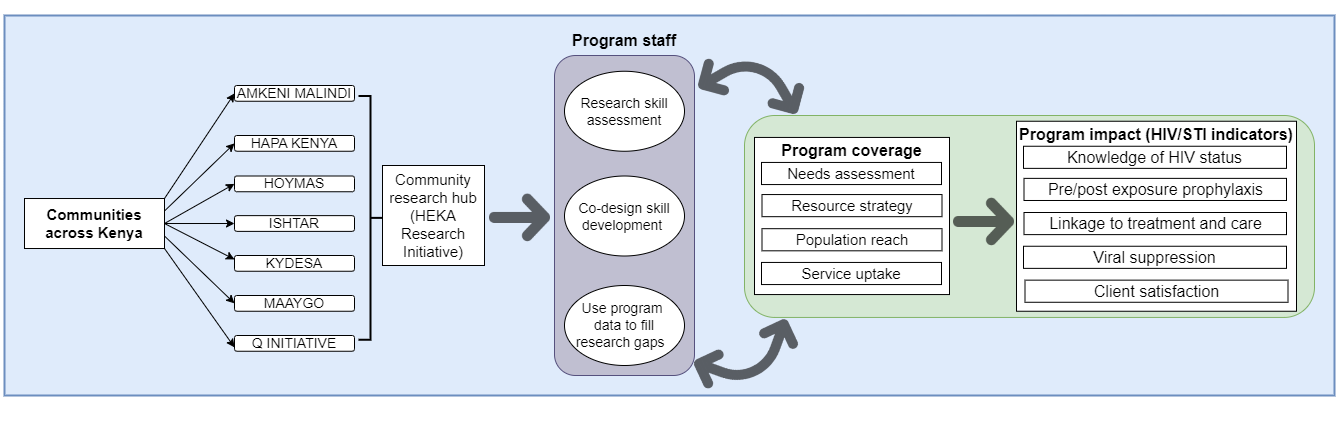
Figure 1. HEKA Program Science Framework: Strengthening Community-led HIV/STI Research in Kenya. This diagram illustrates the HEKA (Health Research Intervention Kuthamini Afya Yetu) initiative, a community-led research platform developed by seven Kenyan community-based organizations (CBOs) to strengthen HIV/STI service delivery for GBMSM. The CBOs collaborate through a central community research hub to build research capacity among program staff—focusing on research skills, co-design practices, and using data to address gaps. This iterative framework connects community-driven data analysis to program coverage assessments (e.g., needs and reach) and ultimately to program impact. The HEKA model exemplifies how community ownership and co-leadership can enhance data-driven decision-making and public health outcomes.
Why was there a need to create the HEKA initiative for HIV/STI services among GBMSM in Kenya?
Community-based organizations play a crucial role in delivering trusted and tailored HIV/STI services to gay, bisexual, and other men who have sex with men (GBMSM). Despite significant involvement, gaps remain in community engagement and quantitative research capacity. To address these gaps, seven community-based organizations in Kenya collaboratively developed the Health Research Intervention Kuthamini Afya Yetu (HEKA), a community-led research platform.
How did the HEKA initiative build research skills and empower community organizations?
HEKA is rooted in the Program Science framework, an iterative approach linking research and program implementation. Through collaborative workshops and ongoing virtual engagements, the community-based organizations partnered closely with academic collaborators to build skills in quantitative research methods and R programming. This partnership shifts the role of community members from data providers to active data users and researchers, empowering them to independently analyze and apply their own program data to enhance HIV/STI services.
What were the key lessons learned and challenges faced during the HEKA initiative?
Key lessons from the HEKA initiative include the effectiveness of a co-leadership model, peer mentorship, and recognizing community priorities in data collection. Challenges faced included maintaining sustained engagement due to funding limitations, managing diverse learning paces, navigating socio-political challenges, and logistical barriers.
HEKA demonstrates a model for community-led quantitative research and capacity-building, potentially guiding similar initiatives globally.
 Mishra Lab